Your First Brazilian Jiu-Jitsu Class: A Quiet Plan for Arriving
Your first Brazilian jiu-jitsu class feels easier when you know where to check in, how to read the room, and what questions to ask before joining.
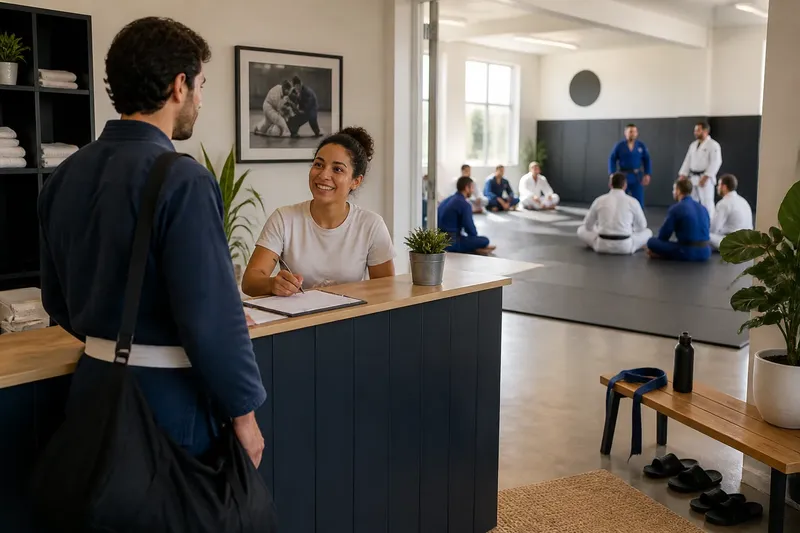
The most common first-class mistake is walking in and trying to copy the room before finding out where newcomers should go. That can mean interrupting instruction, missing a quick orientation, or standing unsure while everyone else settles in. A little attention to the arrival process makes a first Brazilian jiu-jitsu class easier to enter.
Your task is not to look experienced. It is to introduce yourself, listen for the school’s customs, and ask when something is unclear. The front desk and instructor can explain how this particular room works.
Ask how the visit is organized
Before leaving home, check the gym’s current schedule and contact the staff with a few practical questions. Ask whether newcomers should book, which class welcomes beginners, where to check in, and how early to arrive. If you are unsure what to bring, ask the gym directly; its own guidance matters more than assumptions based on another school.
Useful questions include:
- Is this class open to someone with no jiu-jitsu experience?
- Where should I go when I enter the building?
- Should I arrive before class to meet the instructor or complete paperwork?
- Are there rules about changing rooms, shoes, or waiting near the training area?
- Will the session include partner practice, and can a newcomer observe instead?
These answers help you understand the visit’s shape before you arrive. Some schools offer a brief orientation; others ask newcomers to check in with the instructor before the group begins. If the response is vague, ask for a simple arrival plan: where to go, whom to find, and what happens next.
Check in before approaching the training area
Once inside, say that you are new and name the class you came to attend. Follow the staff member’s directions for signing in, storing your belongings, and finding the changing area or restroom. If you cannot identify reception, wait outside the training space and ask someone who works there rather than crossing the mat to get attention.
If the gym gives you a form, read it before signing and ask about anything you do not understand. For health or injury concerns that may affect participation, speak privately with the instructor and seek qualified medical advice when you need a professional judgment. You do not need to share personal details with the whole class.
Introduce yourself to the instructor before the session starts. A direct sentence works well: “This is my first class. Where would you like me to wait, and how should I join?” That gives the instructor a chance to explain the next steps and tell you how to signal if you need to pause.
Watch the room before joining the group
Notice where students leave shoes, where they wait, and how they enter the training area. Customs differ from gym to gym. Do not walk across the mat in street shoes, and ask if you cannot tell where the boundary is or what the footwear rule requires.
At the start of class, watch for cues rather than guessing at a ritual. Students may line up, greet the instructor, or wait for a signal. Stand where you are directed. If you are not sure whether to join a line or remain to the side, ask at a natural pause.
Pay attention to how the instructor organizes newcomers. You may be asked to observe, join a warm-up, or work with a partner. Listen for the next instruction, and ask for a clarification when there is a pause. You do not need to pretend that an unfamiliar routine makes sense.
Use small questions to stay oriented
Short, specific questions are easiest to answer. Try “Where should I stand?” or “Should I watch this part or join in?” Ask when the instructor pauses rather than calling across active instruction.
It is also reasonable to ask how to request a break, whether a drill is optional for newcomers, or whom to tell if something feels uncomfortable. If you cannot follow an explanation, say so. The instructor can clarify what the group is doing without expecting you to know the room’s routines already.
If a partner assignment does not feel appropriate, tell the instructor calmly and ask for another option or permission to observe. You do not owe the class a personal explanation for setting a boundary. The instructor is responsible for directing participation and can help you decide what to do next.
Decide whether to participate in partner practice
A first session may focus on orientation, basic movement, or demonstration. Ask before class whether partner practice is planned and whether you may watch instead. The format varies by school, so do not assume that every first visit includes the same activities.
If you are uncertain, observing is a reasonable choice. If you do take part, follow the instructor’s directions and speak up if you feel unwell, uncomfortable, or unable to continue. Your decision can change during class; you do not have to keep participating because you started.
While watching, notice how the group responds when the instructor stops an activity and how students make room for one another. You are learning how communication works in the room, not trying to memorize every movement from the side.
What should you know before and after class?
How early should I arrive for my first class?
Ask the gym for its preferred arrival time, since check-in and orientation vary. Aim to arrive with enough time to find staff and ask where to wait without interrupting the class.
What if I arrive and cannot find reception?
Stay outside the training area and look for a staff member or posted directions. If no one is obvious, contact the gym by phone or message rather than crossing the mat uninvited.
Do I have to decide about membership after class?
No. You can ask how to book another beginner session and take time to consider the visit. Notice whether you understood the instructor, knew how to ask for help, and felt comfortable with the room’s organization.
What should I ask before I leave?
Ask which session is suitable for a newcomer and what the next visit requires. If you borrowed anything, return it as staff directs and ask where it belongs.
Work through an arrival without guessing
Imagine you have never visited a jiu-jitsu gym, and the class begins soon while the entrance opens into a busy lobby. You check the gym’s schedule, message staff to confirm that beginners may attend, and ask where newcomers should report. The reply says to check in at the desk and wait by the lobby bench for the instructor.
When you arrive, you give your name at the desk, read the sign-in form, and ask the staff member where to leave your bag. You wait at the indicated bench rather than walking onto the mat. When the instructor comes over, you explain that it is your first class and ask whether you should observe or join the opening activity. The instructor gives you a clear place to wait and explains how to ask for a pause. The result is a defined next step, not a guess about where you belong.
Leave with a clear next choice
Before heading out, thank the instructor and ask how to book another beginner-friendly session. You can also ask whom to contact if a question occurs to you later. There is no need to make a membership decision on the spot.
A useful first Brazilian jiu-jitsu class is one that leaves you knowing how the school welcomes newcomers and what your next choice is. Keep the focus on the arrival, the people you can ask, and the signals that help you take part at your own pace.